From Fear to Trust: Relearning My Body After Healing
In February 2025, I made the decision to have a breast reduction—one of the most significant and long-awaited surgeries I have ever undergone, second only to my C-section. It was not a cosmetic impulse or a light decision. It was a necessary choice rooted in years of physical strain, chronic back pain, neck pain, and the accumulated impact of military service on my body. My breasts had become disproportionately large for my frame, and what I carried physically was affecting me daily.
After doing the research, weighing the risks, and being honest about how much discomfort I had normalized, I finally accepted that this surgery was not about vanity—it was about relief, health, and quality of life. It took courage to move forward, but I did, and the surgery was a success.
The year of healing changed more than my body, it changed how I listen to myself. Physicians recommend a full year for recovery, and I honored that, but what I didn’t realize was that healing would demand more than patience, it would require transformation. That year wasn’t just physical. I pivoted in my career. I slowed down in ways I wasn’t used to. I had to confront what it truly meant to begin again.
Scripture tells us, “Be strong and courageous. Do not be afraid… for the Lord your God goes with you” (Deuteronomy 31:6). I understood courage differently in this season—not as bold action, but as quiet obedience to healing.
My body remembered movement before my mind trusted it, and there was a gap between being healed and feeling whole. So I started where I could. Recumbent biking. Light weightlifting. Small, intentional steps. I wasn’t chasing a specific look or physique. I wasn’t focused on aesthetics. I wanted strength, endurance, and a version of health that felt sustainable.
And still—fear lingered.
No one really prepares you for the mental side of healing, especially after major surgery. There are physical restrictions—you can’t lift, you can’t stretch freely, and you often need help in ways you’re not used to. But what stays with you longer is what it does to your mind. When you’re used to being independent, being limited forces you to see yourself differently.
Add in being a Type 1 diabetic, and healing carries additional weight—wound care, infection prevention, constant awareness. Healing becomes layered: physical, emotional, and mental. And depending on your environment, your support, and your stress levels, those layers either ease or intensify.
At some point, I had to make a decision: give myself grace or stay stuck in frustration.
I chose grace, but that didn’t erase hesitation.
That hesitation exposed something deeper—fear.
And Scripture is clear about fear. “For God has not given us a spirit of fear, but of power and of love and of a sound mind” (2 Timothy 1:7). That didn’t mean fear wouldn’t show up. It meant fear didn’t have authority.
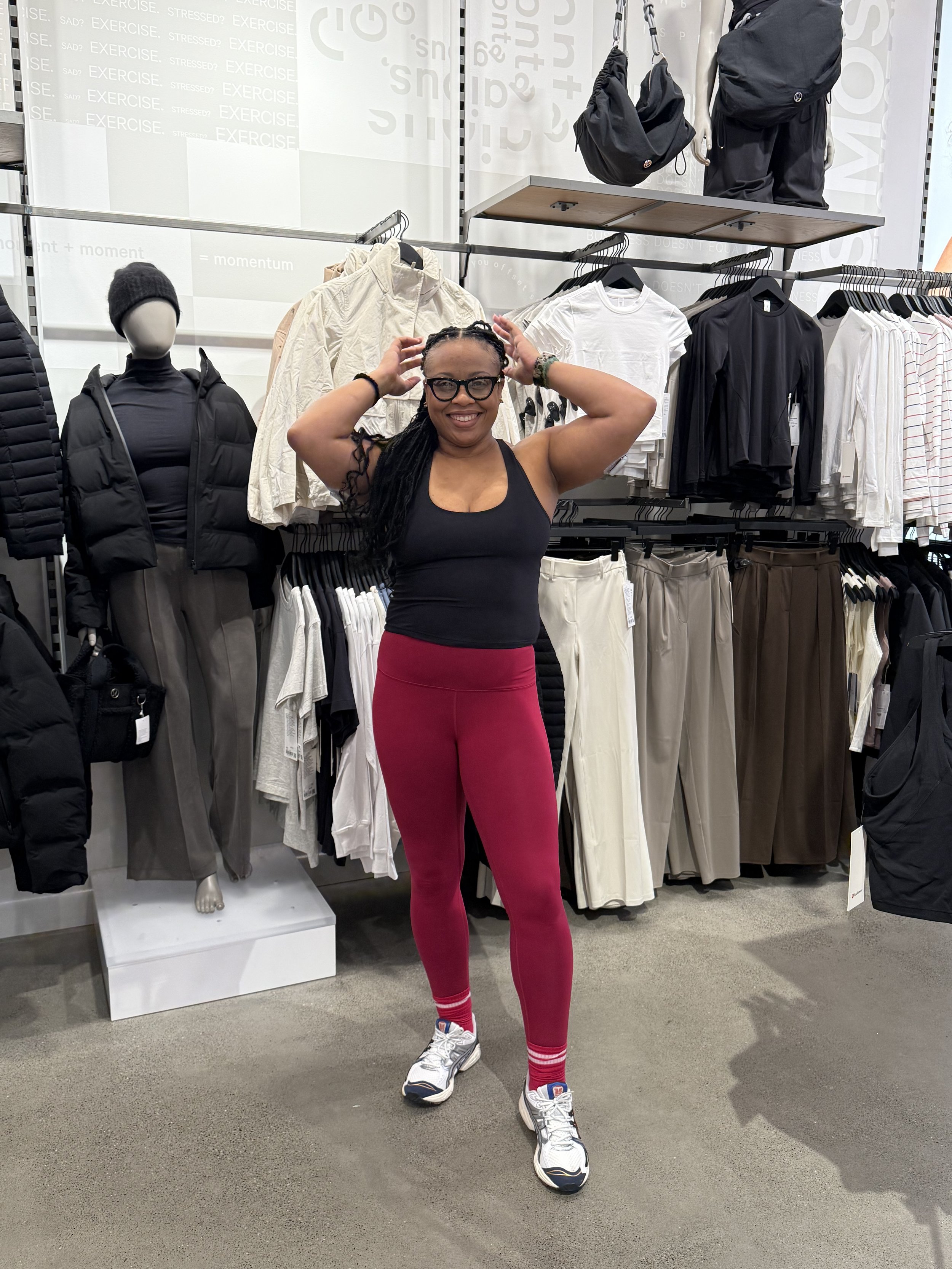
A year later, I stood outside the doors of a lululemon community yoga event in Anchorage, and I hesitated. Not because I couldn’t walk in, but because I wasn’t sure if I trusted my body yet.
That’s the part people don’t talk about.
There’s a difference between being medically cleared and being emotionally ready. There’s a difference between movement being possible and movement feeling safe. Walking into that studio wasn’t about fitness.
It was about rebuilding trust.
The class was called Flow, and what I didn’t realize at the time was that I wasn’t just attending a yoga session—I was stepping into a conversation with my body.
Flow yoga links breath to movement in a continuous, fluid way. Each inhale creates space. Each exhale releases tension. There are no sharp stops, just transitions.
And that mattered more than I expected.
Because my body didn’t need force—it needed permission.
Flow revealed something deeper. This practice is especially grounding for people who carry stress in their bodies, feel disconnected from their physical cues, need movement that supports rather than demands, and are rebuilding trust with themselves. It meets you where you are, not where you think you should be.
And in that space, something shifted in me.
I stopped asking, “Am I doing this right?” and started asking, “Can I stay present in this moment?”
That shift wasn’t just physical—it was spiritual.
Scripture says, “Trust in the Lord with all your heart and lean not on your own understanding” (Proverbs 3:5–6). I realized I had been leaning on control, on performance, on pushing through. But God was inviting me into something different—trust.
Flow, for me, became a physical expression of surrender.
Not giving up at all, but giving over!
That experience introduced me to a different kind of strength—not force, not performance, not pushing through, but awareness.
Flow reminded me that healing isn’t linear, readiness isn’t automatic, and strength doesn’t always look like effort. Sometimes, it looks like slowing down, listening, and choosing to begin again anyway.
And biblically, that’s where the real transformation happens. Surrender is not weakness—it’s alignment.
“My grace is sufficient for you, for my power is made perfect in weakness” (2 Corinthians 12:9).
What I thought was limitation…was actually an invitation.